Automating the Final Step: Smarter Packing for Collated Nail Production
Automation has transformed many stages of nail manufacturing. But there is one part of the production process that has traditionally remained highly dependent on manual labour: packing.
For manufacturers of collated nails, end-of-line handling can require operators to continuously collect finished strips, check their quality, pack them correctly into cartons and keep pace with increasingly productive manufacturing lines.
As production speeds increase, that final step can become a bottleneck. So, what happens when packing becomes part of the automated production line too?
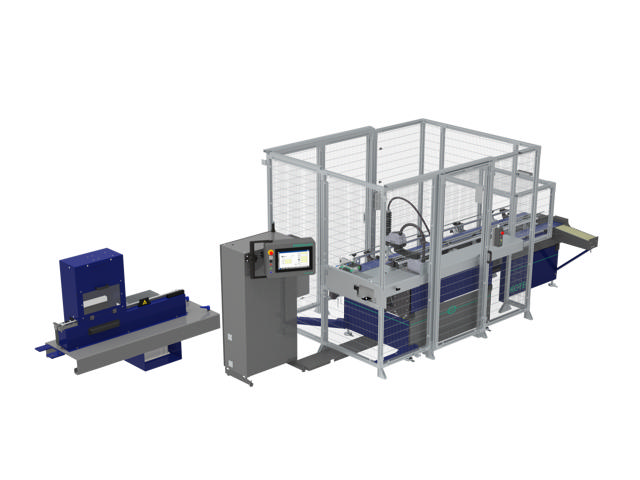
At ENKOTEC, that question led us to develop the ENKOpack ASP01, an automated packing system for collated nail strips. More importantly, it has led us to think about what the next stage of nail manufacturing automation looks like — and what manufacturers need if they are going to automate from wire all the way to the packed product.
Why automate collated nail packing?
The business case for automation has traditionally been strongest around processes that are repetitive, labour-intensive and capable of limiting production capacity. Packing collated nails fits all three.
Packing collated nails may appear relatively straightforward, but doing it continuously across a production shift requires considerable operator involvement. And as upstream machinery becomes faster, the challenge becomes more pronounced: increasing production capacity also increases the volume of finished product that needs to be handled.
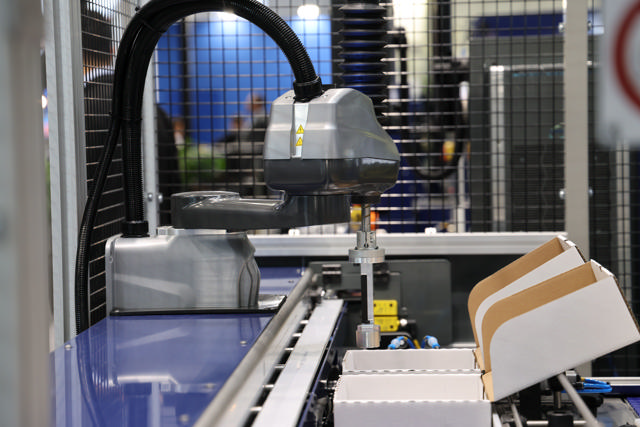
Automated packing changes that relationship. Rather than requiring additional manual handling as output grows, a packing robot can receive finished collated nail strips directly from the production line and place them into cartons automatically.
The ENKOpack ASP01, for example, can pack up to 55 strips per minute and handle different carton formats, including cartons with and without handles. In a configuration with two ENKOTEC production lines this means one operator can oversee production of up to 3,300 nails per minute.

The challenge: automation has to deliver more than speed
For manufacturers, the objective isn't simply to remove an operator from a particular task. It is to create a more continuous production flow, reduce repetitive handling and allow skilled employees to focus on areas where their experience and judgement create greater value.
Packing faster is only useful if manufacturers can trust what is going into the box. This was one of the most important considerations when we began developing the ENKOpack ASP01.
A robot is extremely good at performing the same physical task repeatedly. It can pick up a strip of nails and place it into a carton with speed and consistency. But the robot itself does not know whether that strip meets the manufacturer's quality requirements and that distinction matters.
A misaligned nail, incorrect tape placement or another defect that reaches the carton can ultimately become a customer complaint or claim. With manual packing, an experienced operator may notice those problems while handling the product.
Remove that manual handling, and quality control has to become part of the automated process.
Combining automated packing with automated inspection
For us, the answer was to combine the packing robot with a vision inspection system.
Before a collated nail strip reaches the packing robot, the vision system inspects it against defined quality parameters. These include nail angle, tape placement and nail-head alignment.
If a strip falls outside the specified parameters, it is automatically rejected before packing.
This means inspection isn't based on occasional samples. Every strip passing through the system can be checked before it reaches the carton.
The vision system therefore plays an important supporting role in automated packing: it gives the packing robot the quality control needed to operate as part of a genuinely automated end-of-line process.
From wire to packed nails
This is where automated packing becomes particularly interesting. The ASP01 isn't simply about automating an isolated manual operation. For us, it represents the final stage required to connect the nail manufacturing process into one continuous automated production flow.
Wire enters the production process. Nails are manufactured. They are collated into strips. Those strips are inspected. And finally, they are packed into cartons.
All of these processes can now operate as an integrated line with minimal operator intervention. That changes the conversation around automation.
Historically, manufacturers have often approached automation machine by machine or process by process. But as individual processes become increasingly automated, the opportunity is shifting towards connecting those processes together.
The question becomes less about “How can we automate this machine?” and more about “How can we create a continuous production process?”.
Automation doesn't have to mean removing people
This distinction is particularly important when discussing manufacturing automation.
The objective isn't necessarily to create a factory without people. In many cases, it is about making better use of the people manufacturers already have.
Skilled operators are valuable. Having those operators spend large portions of a shift performing repetitive packing and handling tasks isn't always the best use of that expertise.
Automating those processes can allow operators to oversee a greater amount of production while concentrating on troubleshooting, optimisation, maintenance and other activities where human experience remains essential.
This is becoming increasingly relevant as manufacturers across the industry consider how to increase productivity while dealing with labour availability and rising expectations around product consistency.
Why end-of-line automation matters
There is a natural tendency to focus automation investments on the core manufacturing process. After all, that is where the product is actually being made.
But a production line is ultimately only as efficient as its least efficient stage. If nails can be manufactured and collated faster than they can be inspected, handled and packed, the bottleneck has simply moved further down the line.
That is why we believe end-of-line automation will play an increasingly important role in nail manufacturing.
Automated packing can help manufacturers reduce repetitive manual handling, maintain production flow at higher output levels, make more effective use of skilled operators and connect previously separate processes into a more integrated production line.
The important point is that these benefits are interconnected. Speed without quality creates problems. Quality without sufficient throughput creates bottlenecks. And automation that simply moves manual work from one part of the process to another only solves part of the problem.
The goal should be a production process that works as a whole.

The final step towards fully automated nail production
When we introduced the ENKOpack ASP01, we saw it as the final piece needed to take ENKOTEC's in-line nail production concept all the way from wire to packed collated nails.
The packing robot is certainly the most visible part of that development. But what makes the system significant is how packing, inspection and production work together.
For manufacturers considering the next stage of automation, that may be the bigger opportunity.
It isn't simply about automating another task. It is about looking at where manual processes still interrupt production flow and asking whether those processes can be integrated into the line.
Because as nail manufacturing becomes faster and more automated, the final step shouldn't be an afterthought.
It should be part of the production process.
Frequently asked questions about automated nail packing for collated nails
Automated nail packing uses robotic equipment to handle finished nails or collated nail strips and place them into cartons without continuous manual handling. When integrated directly with a nail production and collating line, automated packing can create a continuous process from manufacturing through to the finished, packed product.
The ENKOpack ASP01 is designed to automatically pack collated nail strips into cartons as part of an integrated nail production line. Finished strips are inspected before reaching the packing robot, after which accepted strips are automatically placed into cartons. The system can pack up to 55 strips per minute and accommodate different carton formats, including cartons with and without handles.
A packing robot reduces the need for repetitive manual handling at the end of the production line. This can help manufacturers maintain production flow as output increases while allowing operators to focus on tasks such as process monitoring, optimisation, maintenance and troubleshooting.
Automating packing can be particularly valuable when upstream nail production and collating processes are already highly automated, as manual packing can otherwise become a bottleneck.
Automated packing needs a method of identifying quality issues that an operator might otherwise notice during manual handling.
With the ENKOpack ASP01 solution, a vision inspection system checks each collated nail strip before packing. The system monitors defined parameters including nail angle, tape placement and nail-head alignment. Strips that fall outside the specified parameters are automatically rejected before they reach the packing robot.
Yes. Rather than relying solely on sample-based quality checks, an integrated vision system can inspect every strip as it passes through the production line. This provides a consistent inspection process before the finished strips are packed.
By integrating nail manufacturing, collating, inspection and automated packing equipment, it is possible to create an in-line production process that takes raw wire through to packed collated nails with minimal operator involvement.
For manufacturers, the benefit is not simply automation of individual machines. Connecting the different stages can reduce manual handovers and bottlenecks while allowing operators to oversee a larger and more integrated production process.